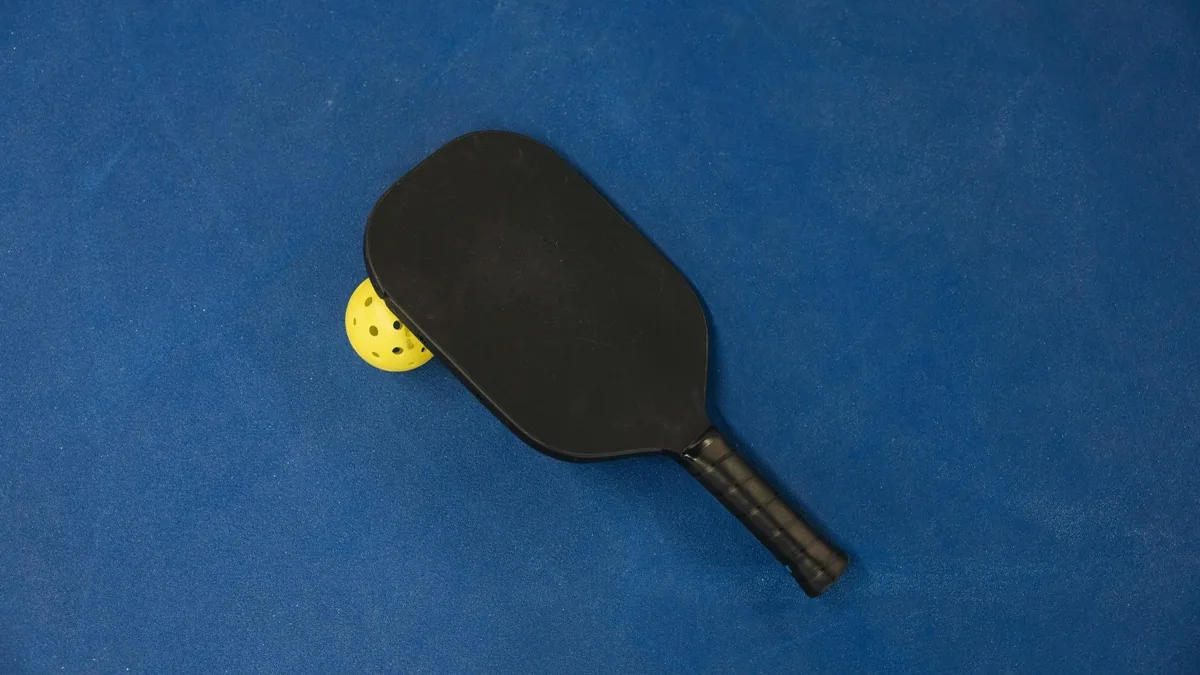
Average Paddle Lifespan
For a player like me who plays 3 to 4 times a week and competes in local tournaments, paddles tend to last between 12 and 24 months. That is a wide range because the materials matter a lot. A high-end carbon fiber paddle with a thermoformed construction often holds up longer than a budget composite. Cheap paddles with foam edge foam and fiberglass faces can degrade noticeably within 6 months of heavy play.
Recreational players who pick up the paddle twice a week may get 3 years or more out of the same gear. Pros and high-level tournament players sometimes go through paddles in 3 to 6 months because they hit harder, more often, and notice subtle performance drops a casual player would never feel.
Signs Your Paddle Is Wearing Out
The face and core both wear down over time, but they wear differently. Knowing what to look for helps you catch the decline before it costs you matches.
Dead Spots in the Hitting Surface
Tap the face of the paddle with a knuckle or a pickleball, working from edge to edge. A new paddle has a consistent sound across the face. As the core breaks down, certain areas start to sound dull or hollow. These are dead spots, and they hit very differently than the rest of the paddle.
You can usually feel them during play before you can hear them. The ball will not pop the same way. Drives will feel mushy. Drop shots will land short of where you intended. Once you have one or two clear dead spots, the paddle is on borrowed time.
Loss of Spin and Grit
Carbon fiber and raw composite faces have a textured surface that grips the ball and generates spin. That texture wears down with use. You will see it as smoother, shinier patches where the ball impacts most often. Your topspin shots will start to slide off the face rather than bite. Cross-court dinks will not curl the way they used to.
Some players use grit additives or replacement skins to extend the life of a textured face, but these are usually short-term fixes. Once the surface is significantly worn, the spin performance is gone.
Edge Guard Damage
The edge guard takes the most physical abuse. Court scrapes, missed dives, and paddle clashes all leave marks. Cosmetic dings are fine. What you do not want is an edge guard that has separated from the paddle body, lifted at the corners, or exposed the core underneath. That kind of damage lets moisture and debris into the core, which accelerates the breakdown.
Performance vs Appearance
A paddle can look beat up and play great, or look pristine and play badly. Cosmetic wear is not the same as performance loss. I have paddles that look like they survived a war but still hit consistently. I have also retired paddles that looked nearly new because they had developed a dead spot near the sweet spot.
Trust how the paddle plays, not how it looks. If your drops are short, your drives are dead, and your spin shots are not biting, those are real signals. If the paddle just has scratches and chipped paint but plays the same, you are fine.
What Causes Faster Wear
Some factors shorten paddle life beyond normal use. Storing the paddle in a hot car damages adhesives and can warp materials. Extreme cold can make the core brittle. Leaving a paddle in damp conditions invites moisture into the core through any small crack in the edge guard.
Hard hitters wear paddles faster than touch players. If you drive everything and play a power game, your gear will not last as long as someone who relies on dinks and resets. According to USA Pickleball, paddles must meet specific surface and dimensional standards, and significant wear can technically take a paddle out of compliance for tournament play.
When Replacement Is Worth the Cost
A solid paddle in the $150 to $250 range that you use for two years costs roughly $1.50 to $2.50 per playing session. That math makes replacement easy to justify when performance drops. Trying to squeeze another six months out of a degraded paddle is rarely worth it if you are competing or working hard to improve.
Recreational players who are not chasing a rating can stretch a paddle further. If you are happy with how it plays and you are not losing matches because of the gear, keep using it. The honest test is whether you would buy the same paddle today knowing how it currently plays. If the answer is no, it is probably time.
Extending Paddle Life
A few habits help paddles last longer. Keep the paddle out of hot cars, especially in summer. Wipe the face down after each session, especially after outdoor play where dust and pollen build up. Replace grip tape regularly so you are not gripping harder than needed to compensate for slick wraps. Use a paddle case or sleeve when transporting it so the edge guard does not get banged up in your bag.
None of these will make a paddle last forever, but they help you get the full lifespan out of what you bought.