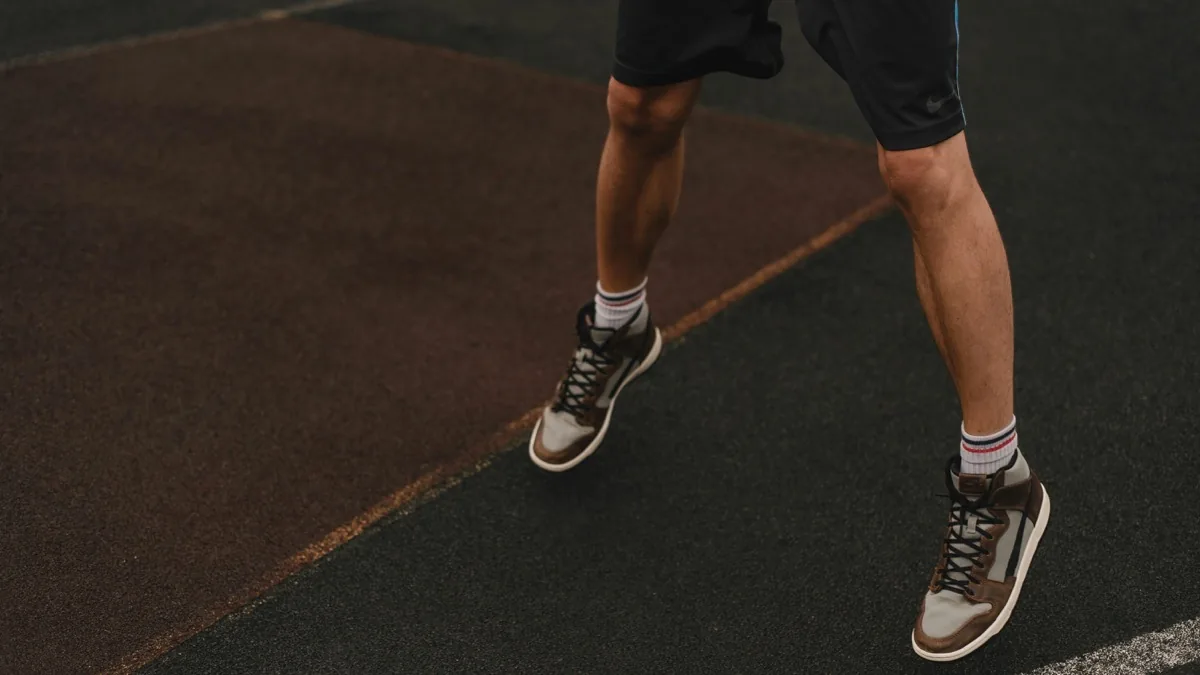
Why Court Shoes Run Narrow
Court shoes are engineered to keep your foot stable during lateral movement. The simplest way to do that is to make the shoe snug around the midfoot and forefoot. A narrower last gives the shoe better lateral grip on the foot, which translates to faster direction changes and less slop inside the shoe. For most foot shapes, this design works. For people with wider feet, the same design creates pressure points at the metatarsal heads, hot spots along the outer foot, and the kind of fatigue that starts as a vague ache and ends with a podiatrist appointment.
You can sometimes fake your way into a fit by going up half a size in standard width. The toe box gets a little longer, which gives your forefoot a tiny bit more room. The problem is that going longer does not actually make the shoe wider. You end up with a shoe that is too long in the heel and still tight across the ball of the foot. The fit looks okay in the store and falls apart after an hour of play.
How to Measure Your Width Accurately
Stand on a piece of paper and trace your foot late in the day, after you have been on your feet. Foot width can increase by a quarter inch or more during a long pickleball session, and that swelling is part of what determines whether a shoe fits during play.
Measure the widest part of your foot in inches. Compare against a width chart from the manufacturer you are considering. Brett Hartley, a fitter at a specialty running store I trust, told me that most people who think they need wide actually need wide. The instinct is usually correct. The bigger issue is people who need wide refusing to buy wide because of style preferences.
Standard Width Designations
Men's sizes use D for standard, 2E for wide, and 4E for extra wide. Women's sizes use B for standard, D for wide, and 2E for extra wide. Not every manufacturer uses these designations, and not every model in a line comes in wide. Always check the specific shoe, not just the brand.
Brands That Carry Wide Court Shoes
Selection varies and inventory changes year to year. The brands below have shown the most consistent commitment to wide widths in court shoes over the last few seasons.
New Balance
New Balance is the strongest option for wide-footed players. The brand has built much of its identity around offering multiple widths across its full catalog. The 996v5 and Fresh Foam Lav models both come in 2E and 4E widths. The 806 court shoe also offers wide options, though availability rotates. Fit runs roomy across the forefoot without being sloppy in the heel, which is exactly what wide-footed players need.
K-Swiss
K-Swiss has long made court shoes that run a touch wider than average even in standard widths. The Hypercourt Express models are worth a look for players in the 2E range who do not want to size up. Some Hypercourt models are also offered in explicit wide widths through major retailers.
ASICS
ASICS offers a more limited wide selection in court shoes than in running shoes, but the Gel-Resolution and Gel-Game series both have 2E options in certain colorways and sizes. Availability is inconsistent. I have had better luck finding ASICS wide widths on the Zappos site than at brick-and-mortar shops.
Other Brands to Check
Babolat, Wilson, and Head occasionally offer wider fit options on flagship models, but selection is thin. Adidas court shoes generally run narrow. Nike Court models are also narrow as a rule. If you have wide feet and a strong brand preference for one of these, plan to spend time finding the right specific model rather than assuming any model from the brand will work.
How to Test Fit on a Court Shoe
Trying shoes on in a store is the easy part. The hard part is figuring out whether the shoe will actually work during play. A shoe that feels fine for two minutes can be brutal at hour two of a session.
Try shoes on late in the day. Wear the socks you actually play in. Stand up and walk around. Push off laterally on the floor mat. Squeeze the sides of the shoe with your fingers and feel whether there is room or whether the upper is stretched tight against your foot. If you can see the seams pulling outward when you stand, the shoe is too narrow regardless of how the length feels.
Pay attention to the toe box. Your longest toe should be about a thumbnail's width from the front of the shoe with weight on your foot. The forefoot should feel wrapped, not squeezed. The American Podiatric Medical Association, which publishes general footwear guidance at apma.org, recommends ensuring your foot is not laterally compressed inside the shoe, which is the most common failure mode in court footwear.
Common Wide Width Mistakes
The first mistake is going up half a size in a standard width. As covered earlier, this gives you length, not width. You end up with sliding heels and continued forefoot pressure.
The second mistake is buying online without checking the return policy. Sites like Zappos and Running Warehouse have generous return policies for wide-width shoppers because they know fit is variable. Other sites charge restocking fees or limit returns for opened boxes. Read the fine print before ordering.
The third mistake is wearing thin socks to make a tight shoe work. This rarely solves the underlying problem and introduces blister risk. If the shoe needs thinner socks to fit, the shoe is too narrow.
When to Just Go Custom
If you have tried multiple wide options and nothing fits properly, the next step is an orthotic insert or custom footbed. A podiatrist can recommend an insert that fills a slightly oversized shoe and improves the fit without compressing your foot. This is a longer and more expensive path, but for players with significantly wide or oddly shaped feet, it is sometimes the only way to play comfortably.
Custom orthotics through a podiatrist typically run $300 to $500 and last several years. Off-the-shelf options like Superfeet or Powerstep range from $40 to $70 and work for many players. They do not make a narrow shoe wide, but they can help with stability inside a shoe that has the right width but slightly imperfect contour.