The Reset Isn't What I Thought It Was
When pickleball instructors say 'reset the ball,' they mean hit it soft and land it in the kitchen to neutralize the speed. I understood that intellectually. What I didn't understand was how different the technique is for a reset against a hard drive versus a reset out of a dink rally.
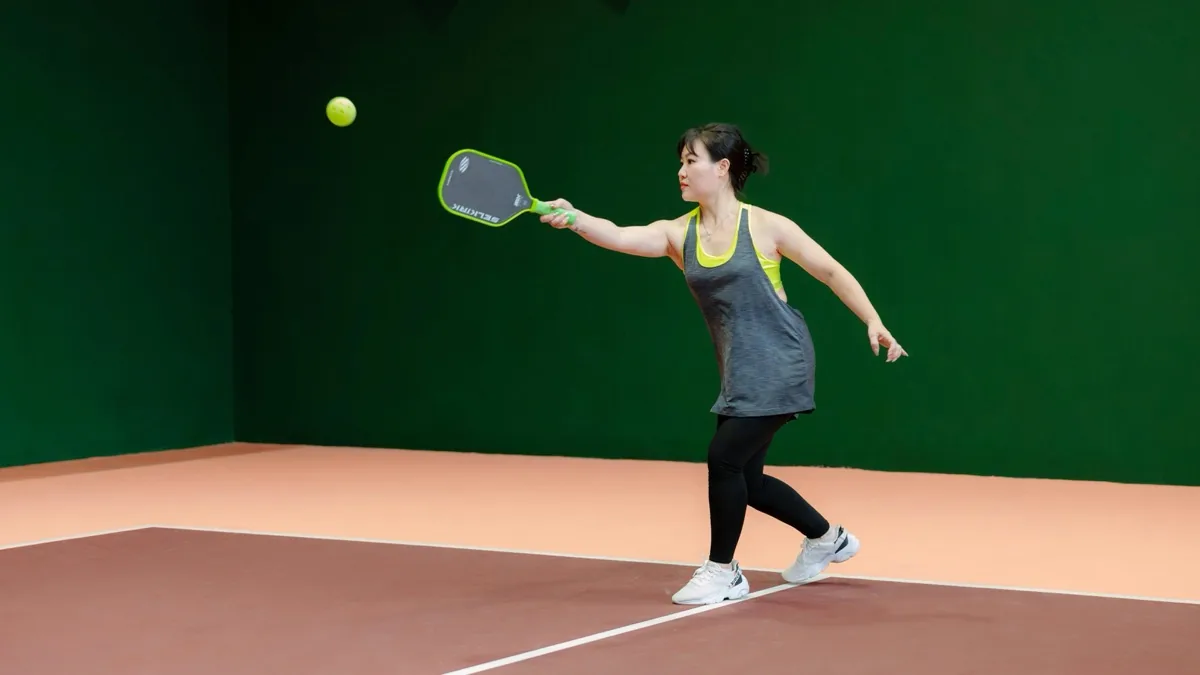
Against a banger, you're absorbing pace. The ball comes at you with a lot of energy, and if you try to swing at it or even just hold firm, it's going to pop up and give them another easy attack. You have to actually soften your grip at contact. Some people call it 'giving' with the ball. Your paddle almost pulls back slightly as you make contact.
Tom watched me drill this for about half an hour one afternoon at Lincoln Park. He kept telling me I was tightening my grip right before contact. 'You're tensing up because the ball is coming fast,' he said. 'That's the opposite of what you need.' He was right. I was scared of the hard ball and responding by doing the exact thing that made it worse. Once I focused on staying loose at contact, my resets started actually working.
Targeting the Body
The other thing that helped me was targeting Derek's body instead of his paddle side or his backhand. Body shots are hard to do anything with. You can't really generate power or control when the ball is right at your hip or stomach. Most bangers will try to move you around, but if you can consistently put the ball at their right hip, they have to make a choice: step out of the way or awkwardly block it.
My friend Sandra, who plays up at the Northgate courts and competes at 4.0, told me this is how she handles bangers all the time. 'Everyone tries to go to their backhand,' she said. 'Go at the body. They don't know what to do with it.' She wasn't wrong. The first time I started targeting Derek's body, he started moving around more, and that created more errors on his side.
There's a risk with body shots that you hit them too central and they run around it for an easy forehand. You want to aim at the hip, not the belt buckle. Small target, but with practice it gets easier to hit consistently.
Stop Trying to Out-Bang the Banger
This one sounds obvious, but I wasted about six weeks trying to add more power to my game so I could match Derek's pace. I bought a heavier paddle because I thought more mass would help me drive through his drives. Spent around $160 on a paddle I ended up giving away. The heavier paddle just made my arm tired and my resets worse.
The whole point of being a banger is that pace favors the hitter. The ball is already coming fast, and if you try to return fire with more pace, you're just giving it back to them with even more energy to work with. The court gets shortened when you both speed up, and they're going to win that exchange more often than you are because they've practiced it more.
Bangers are not usually as good when the game slows down. They chose the banger style for a reason, and part of that reason is they don't have a great slow game. When I stopped trying to trade power with Derek and started consistently resetting and dinking, he started making more errors. He'd go for a winner from a neutral position because he wasn't comfortable just playing it out. His unforced error rate was way higher in slow rallies than in fast ones.
When the Reset Isn't Working
Sometimes you're just not going to successfully reset a hard drive. The ball is at your feet, you're off balance, the pace is too much. In those situations, the block lob is actually a useful option. Not a big looping lob, just a soft pop-up that goes over their head. It breaks their rhythm, gives you time, and lets you reset your positioning. I hated doing it at first because it felt like giving up the point. But getting out of a losing position is better than heroically trying to reset a ball you can't control.
Where to Stand Against a Banger
Most of my early positioning against hard hitters was too close to the net. I'd followed the general advice to get to the kitchen line quickly, but against someone who drives everything, being right at the net means you have no time to react. I started taking a step or two back from the kitchen line when I knew a drive was coming. This gave me an extra half-second to react and get my reset technique working.
The tradeoff is that you give up some net positioning. But against a banger who isn't going to dink anyway, that advantage is somewhat theoretical. The actual fight is absorbing the pace and getting the ball back low. A little extra distance from the net helps with that, and once you've reset the rally you can move forward again.
USA Pickleball's resources on adaptive positioning cover this well. The principle is that you adjust based on what's actually happening in the game, not on what's theoretically optimal. Against a banger, the optimal position and the actual best position are not the same thing.
Where Derek Is Now
He's still at Bitter Lake on Saturdays. But we have a pretty even record now, and a few months ago he actually asked me what I'd done differently. Told him I'd just gotten faster. He laughed.
The honest answer is I stopped trying to play the game he wanted and started playing the game I'm better at. Resets, dinking, body shots, staying patient. It's not glamorous. But the most fun I have at the courts is when I neutralize someone who thinks they're going to blast through me and watch their error rate climb as the game slows down.
Takes a while to get there. Worth working on.