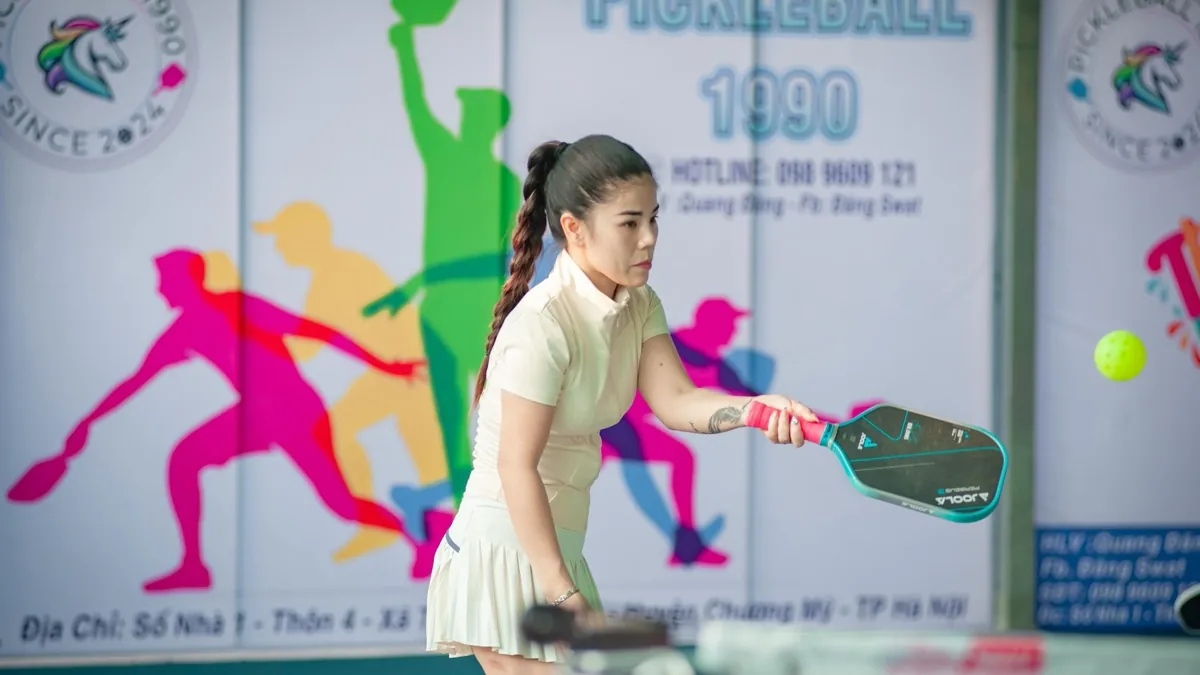
Have the Pre-Game Conversation
The time to agree on who covers what is before the first serve, not after a miscue in the third game. Even ten minutes with a new partner to cover the basics prevents most of the confusion that happens at rec play.
The things worth covering: who takes balls down the middle, which player takes overhead lobs when both could reach, what signal you'll use if you want to stack, and whether you want feedback between points at all. Some people hate hearing anything mid-game. Better to know that upfront.
With my regular partner Kevin, we got this down to a five-minute routine before any session. It sounds like a lot until you realize how many points you're currently losing to the same preventable mistakes.
Middle Ball Rules
The middle ball situation causes more dropped points than almost anything else in recreational doubles. Two players both hesitate, the ball drops between them. Or they both go for it and one gets in the other's way. Either way, free point for the other team.
The standard rule is that the player on the forehand side takes middle balls. If both players are right-handed, the one on the left side of the court has their forehand in the middle. That player owns those shots. The other player covers their own half.
When the Standard Rule Does Not Apply
Lefty-righty combinations flip the default. If both forehands are in the middle, you need a different agreement, usually that whoever is in better position calls it. Speed-up balls down the middle at the kitchen are a different situation than a reset opportunity. Talk about both scenarios.
Practice the Decision Before Points Happen
You can drill middle ball decisions with a partner feeding. One person feeds a middle ball, both players call it out loud. The player whose job it is says "mine," the other says nothing or steps back. Thirty minutes of this makes it automatic.
On-Court Calls That Actually Work
"Mine" and "yours" create a fraction of a second of interpretation that can be enough to lose a point. Both players hearing "mine" at the same time still need to figure out who said it. Clearer options work better in practice.
"Got It" Instead of "Mine"
"Got it" is a commitment. When you say it, you own the ball completely. Your partner should immediately clear the lane. This phrasing tends to come out more decisively because it is phrased as a completed claim rather than a possessive that your partner has to process.
"Leave It" for Balls Going Out
Calling "leave it" is one of the highest-value communication habits in doubles. A ball headed out of bounds that your partner swings at because you said nothing is a completely avoidable point loss. Train yourself to call this loudly and early. The USA Pickleball official rules specify that a ball touching any part of the line is in, so your read on depth matters and your partner needs to trust that call.
"Switch" for Poaching
If you're moving to cover your partner's side, calling "switch" gives them a chance to cover yours rather than standing there confused. This is especially useful when one player is pulled wide and the other needs to slide over. Say it before you commit to the movement, not after.
Between Points
What you say between points is almost as important as what you say during them. The two biggest mistakes are saying nothing and saying too much.
Saying nothing after an error lets the error compound. Your partner does not know if you are frustrated, if you have a plan, or if you noticed the same thing they did. One brief acknowledgment keeps you connected. It does not have to be much. "Good call on that leave" or "I should have moved sooner" takes three seconds and resets the collaboration.
Saying too much turns the court into a clinic. Your partner is not your student. Keep it to one observation per side change and zero criticism unless specifically asked. Most recreational players respond better to a short encouragement than a tactical lecture between games.
Adjusting With a New Partner
At rec play you will often end up next to someone you have never played with. The communication system still applies, it just needs a faster calibration.
The first thing I do is ask one question: "You want to call middle balls or split it by side?" Most experienced players have a preference. That single answer tells me a lot about how they think about the game. If they look confused by the question, I know to be more vocal and directive during the match.
Watch what your new partner does in the warmup. Do they move to poach? Do they cover a lot of court or stay in their lane? Their instincts in the warmup are usually their instincts in the game. Adapt to what you see rather than trying to install a new system in two minutes.