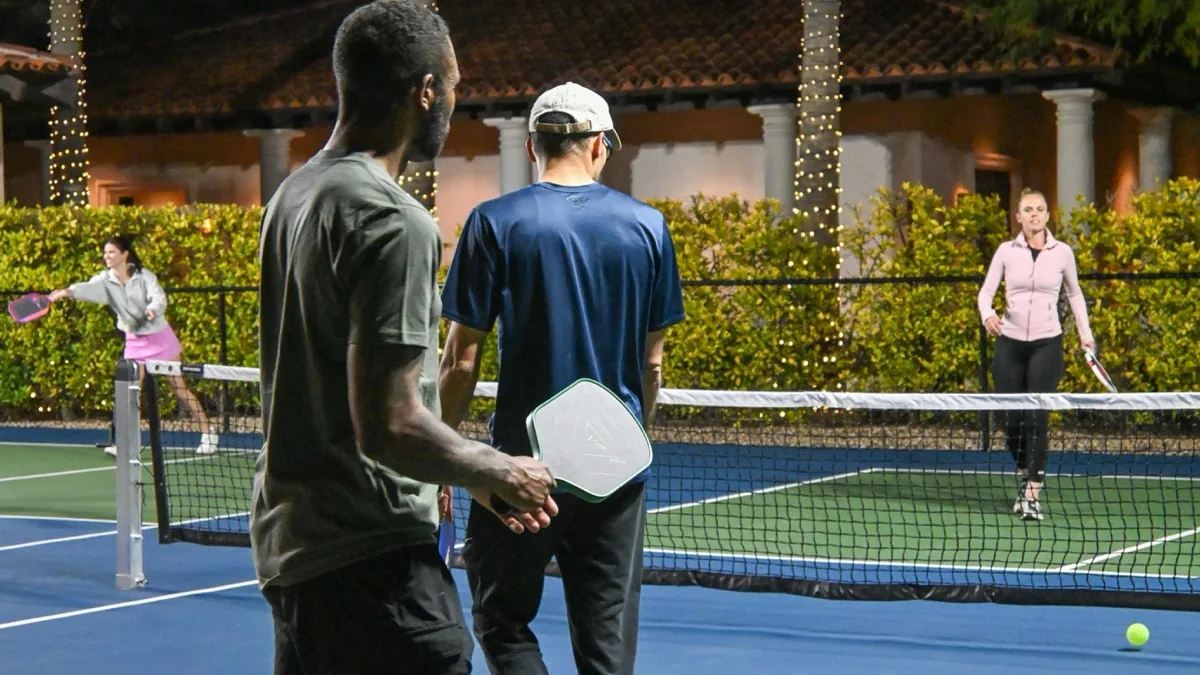
The Athletic Ready Position
Before you can move, you need to be ready to move. Most recreational players stand too upright and too stiff.
Knees Bent
Not a deep squat, just a comfortable athletic bend. Like you're about to jump. This loads your legs to move quickly in any direction.
Weight on Balls of Feet
Not on your heels. Heels down means slow movement. Stay on the balls of your feet ready to push off.
Paddle Up
Keep your paddle in front of you at about chest height. Not down at your side. This isn't footwork exactly but it works with your stance.
Stay Relaxed
Tension slows you down. Be ready but not rigid. Your legs should feel springy, not locked.
The Split Step
This is the most important footwork move in pickleball. If you only learn one thing from this article, learn this.
What It Is
A small hop that lands with both feet hitting the ground at the same time, just as your opponent is about to hit the ball. It's a reset that gets you balanced and ready to react.
When to Do It
Every time your opponent hits. After your third shot as you're moving forward. Before each exchange at the net. Basically constantly. It becomes automatic with practice.
Why It Works
When both feet land together, you can push off in any direction. If you're mid-stride when they hit, you can only go one way. The split step gives you options.
Common Mistake
Splitting too early or too late. Too early and you're already standing still when they hit. Too late and you're still in the air. Timing comes with practice.
Moving Laterally
Most movement in pickleball is side to side, not forward and back.
Shuffle Steps
Slide your feet without crossing them. Outside foot pushes, inside foot slides. Keeps you facing the net and balanced. Don't let your feet come together or cross.
Cross-Over Step
For longer distances, a cross-over is faster than shuffling. Cross the far foot over and push off. Use this when the ball is further away and you need to cover ground quickly.
When to Use Each
Shuffles for short distances and when you have time. Cross-overs for longer distances when you're stretched. Most players default to one or the other. Learn both.
Moving Forward
Getting to the net efficiently matters a lot.
After the Return
Move forward immediately after hitting the return. Don't admire your shot. Your goal is to be at or near the kitchen line when their third shot comes.
After the Third Shot
Hit your third shot then start moving. Don't just stand there. Get as close to the net as you can before the next ball comes, then split step.
Don't Run Through the Shot
If a ball comes while you're moving forward, stop, hit, then continue. Running and swinging simultaneously produces bad shots. Controlled movement beats rushing.
Recovery
Getting back to position after reaching for balls.
Push Back Immediately
After reaching wide for a ball, push back toward center right away. Don't hang out on the sideline. Your opponent will hit the other way.
Watch and Recover
Keep your eyes on the ball while recovering. Don't just run back blindly. You need to see where the next shot is going.
Partner Communication
If you're out of position, tell your partner. "I'm back" or "you go" helps them cover while you recover.
Practice Ideas
Footwork can be practiced without even hitting balls.
Shadow Drills
Move around the court pretending to hit shots. Focus on split steps, shuffles, and recovery. Do this for five minutes before playing.
Ladder Drills
Agility ladders improve foot speed and coordination. Quick feet translate directly to better court coverage.
Watch the Pros
Pay attention to their feet during matches. Notice how they're constantly moving, constantly split stepping. Try to mirror that energy in your game.