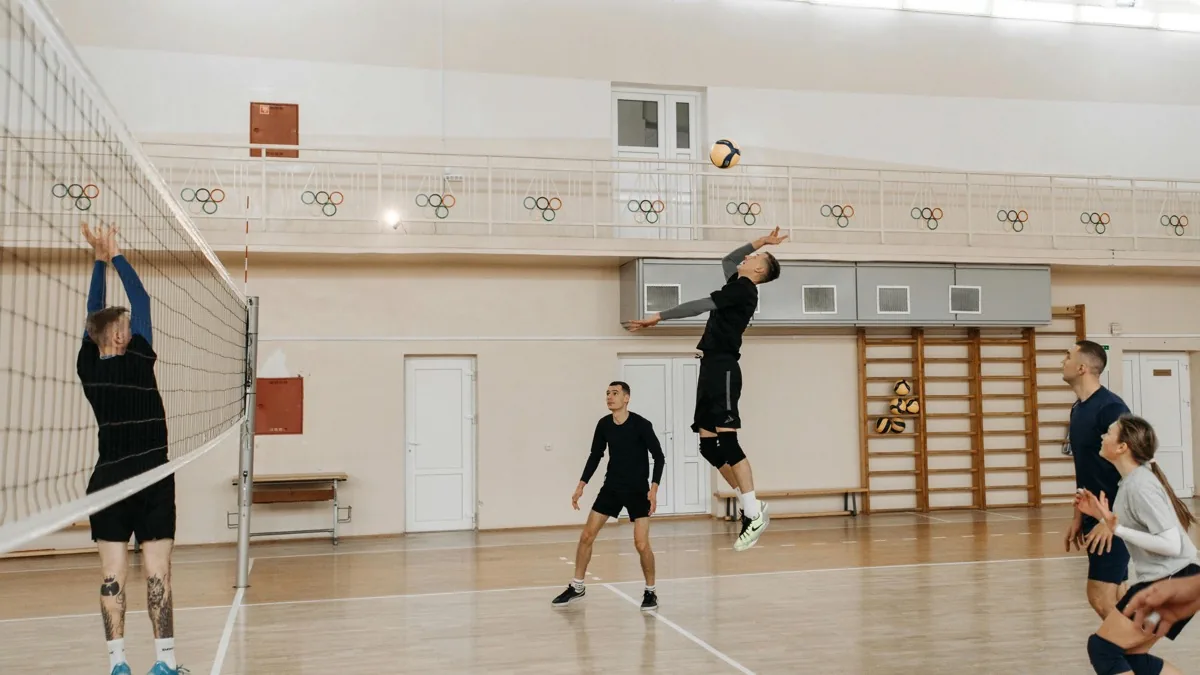
What a Speed-Up Shot Actually Is
A speed-up shot is a deliberate acceleration from a dinking exchange, usually aimed at your opponent's non-paddle shoulder, hip, or elbow — spots where a quick reset is mechanically awkward. You're not waiting for a short ball or a pop-up. You're attacking from a neutral position, betting that your opponent isn't ready for a hard ball.
It's different from a drive off a short return or an overhead. Those are opportunistic. A speed-up is proactive. You're creating the opening rather than waiting for it. The risk is that if your opponent IS ready and gets their paddle up, you've handed them a hard ball they can redirect or even speed up back at you.
How I Started Learning It
I asked Derek to show me what he was seeing when he decided to speed up. His answer was pretty simple: he was looking for moments when my paddle was low and my shoulder was open, usually right after I'd dinked cross-court and my weight was shifting to recover position. That half-second window where I'm resetting my stance is when he'd go.
I started drilling it at the Rainier Beach courts with another regular, a woman named Cora Yuen who plays at a solid 4.0 and has a ridiculous forehand speed-up. She let me feed her balls from the kitchen line and try to find those same windows. My early attempts were either too slow (which just started a faster dink rally) or aimed wrong (I kept going too far to the body center, giving her a comfortable backhand reset).
The key Cora kept telling me: go to the hip on the backhand side, not the center of the body. That's the awkward spot. A ball at your right hip if you're right-handed forces you to reach across your body or pull your elbow back in a hurry. Neither produces a clean reset.
The Backhand Speed-Up
I picked up the forehand version faster than the backhand. Forehand speed-ups feel natural — you're just accelerating through a normal dink stroke. The backhand speed-up is trickier because you have to generate pace without a long windup that telegraphs what's coming. If they see your elbow go back, they're already moving their paddle into position. The whole point is surprise, so the windup has to look like a regular dink until the last second. It took me probably two months of consistent drilling before my backhand speed-up was reliable enough to actually use in games.
When to Pull the Trigger
The mistake I see from newer players is using speed-ups randomly. They get impatient in a long dink rally, pick a moment, and fire. That works sometimes, but it's not sustainable. Good opponents will start reading you and getting their paddles up early, turning your attack into their attack.
What I look for now:
Low paddle position. If their paddle tip is pointing at the ground and their arm is extended, a speed-up to the shoulder is hard to recover from. They'd have to drag the paddle up quickly while adjusting the face angle.
Off-balance moments. After a wide cross-court dink, there's often a half-step of recovery. That's real.
Backhand vulnerability. Some players have airtight backhand resets. Other players flinch at hard balls to the backhand hip. Figure out which you're dealing with in the first few games and exploit accordingly.
Pattern breaking. If you've been dinking cross-court three or four times in a row, a speed-up down the line catches people mid-pattern. They're expecting another cross-court and their weight is moving the wrong direction.
The Counter: What to Do When It's Used Against You
Learning to speed up also made me dramatically better at handling speed-ups. You start seeing the body language that precedes it. The slight shoulder rotation. The grip tightening. That tiny extra bend in the elbow.
When you read one coming, the answer is not to swing hard back. That's how speed-up exchanges escalate into a chaotic mess that usually ends with someone hitting the ceiling on an indoor court or someone getting a ball in the stomach outdoors. The answer is a compact, firm reset — close your paddle face slightly and just absorb the ball back into the kitchen. Take the pace off it. Put it back low and make them speed up again from an even more neutral position.
Derek actually credits that counter strategy with why he stopped using speed-ups against me as often. Once I started blocking them back softly instead of panicking, the move stopped working. He had to go back to patience and wait for me to pop something up.
USA Pickleball's official rules have nothing specific to say about shot selection, obviously, but their player development resources cover the soft game extensively if you want additional context on the dink/speed-up dynamic.
Building It Into Your Game
I'd say it took me a full year to feel genuinely comfortable using speed-ups in competitive games. Drilling is different from game situations. In drilling, you know it's coming. In a game, you have to decide in the moment whether the window is there, execute, and then process the response immediately.
The progression that worked for me: drill the stroke mechanics first, then work on reading opponent paddle position in casual games, then start throwing in one or two speed-ups per game intentionally, then let it become instinctive.
Don't try to add it to your game in a tournament. Add it in rec play where the consequences are just losing a point, not a match. By the time I was using it regularly in tournaments it felt as natural as dinking — which is exactly what you want. The best speed-up is the one your opponent never saw coming because your body language gave nothing away.